
I have just attended the UNEP+50 meeting in Stockholm. On the fiftieth anniversary of the creation of the United Nation Environmental Programme, state and government delegations, non-state actors, international institutions as well as NGOs, indigenous peoples and other traditional knowledge holders have come together around a key resounding message “It’s time for bold choices. It’s time for urgent action. It’s time for a better future on a healthy planet“
Beside attending some official sessions of the event representing the NGO New Humanity, I was also involved in organising a number of side events with other development organisations as well as Faith-based organisations (FBOs) to reflect on the role of spiritual and traditional values in bringing about change on the ground.
I will probably write more about this in a follow up blog post but this morning, going around Stockholm before making my way to the airport, I was especially captivated by a striking image.
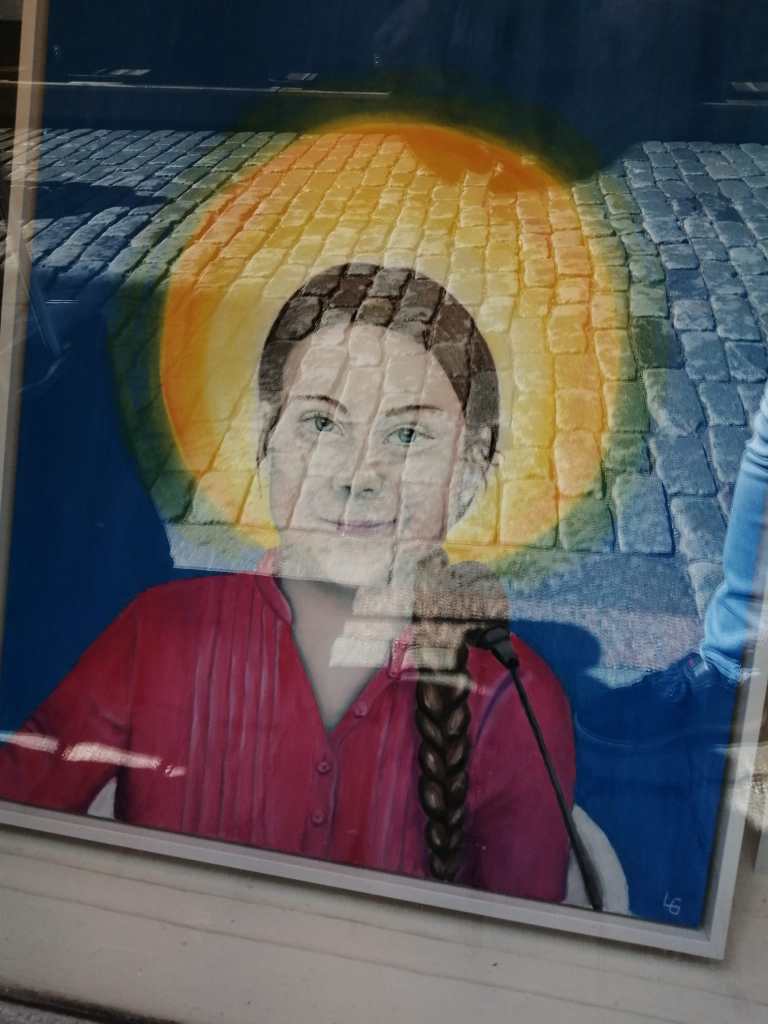
A steet art, saint-like painting of Swedish-activist Greta Thunberg really caught my imagination. Far from putting her on a pedistal she clearly speaks to the hearts and the minds of many, particularly the youths. With her energy and determination she has perhaps contributed more than anybody else at the grassroots level to catalise action on the ground and speak truth to power on several occasions.
This has made me reflect on how religious institutions often communicate and mediate that message of “holiness” that often is so central in the spiritual discourse and that I personally interpret as a call for true and complete flourishing of the human person.
Perhaps the triple ecological crisis we are facing is not only urging faiths to get engaged to save the planet, but also somehow reframing the narrative of how we interpret our own spirituality individually and as a community.
 Water & Wine
Leave a comment