
This post was first published in the Wonderverse blog
From the moment when early humans started to control and master fire, i.e., around 1.5 million years ago, the course of our history was changed forever. Fire has turned us from being hunted into hunters. It is through fire that we gradually became warriors, builders and explorers.
No other tool in human history explains our success as a species, to the point that we have embedded it into a myth as being a gift from the gods.
According to the Harvard anthropologist Richard Wrangham fire has also introduced the single invention that perhaps most influenced our evolution: cooking!
Cooked food meant less time spent chewing, foraging and digesting. This allowed Homo erectus to gradually develop a smaller, more efficient digestive tract. From an evolutionary standpoint, that boost to food has effectively provided early humans with bigger brains and more free time.
But what actually is fire? And what is it made of?
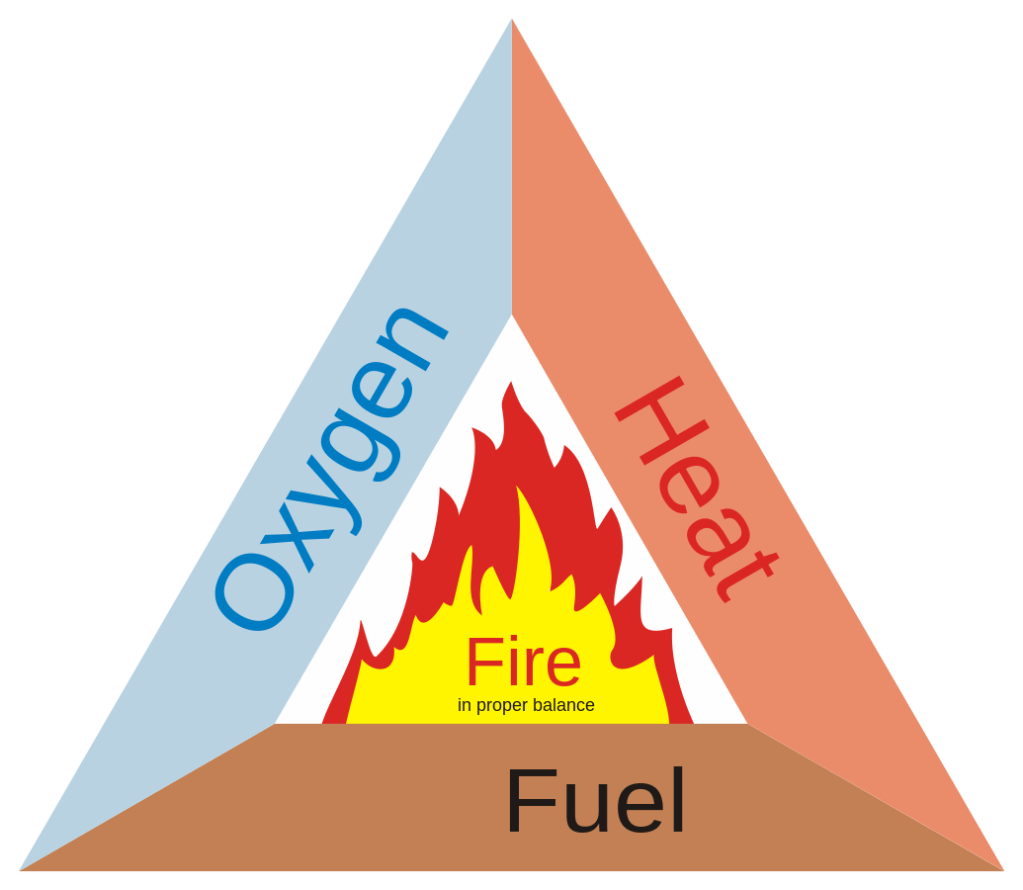
Fire is the visible effect of the process called combustion, which is a particular type of chemical reaction. In order for combustion to occur and for flames to form, three things must be present at any given moment: fuel, oxygen, and energy (usually in the form of heat). At a certain point in the combustion reaction, called the ignition point, flames are produced, and once energy starts the reaction, it continues so long as fuel and oxygen are present. This triad of essential components, also known as the “fire triangle” (see the Figure above) expresses the fundamental “relational” character of this special chemical reaction that has enabled the development of our civilization.
References
- Wrangham, Richard. Catching fire: how cooking made us human. Basic books, 2009.
- Kit Chapman, The complexity of fire, Chemistry World, 20 July 2020. https://www.chemistryworld.com/features/the-complex-chemistry-of-fire/4012100.article#/
 Water & Wine
Leave a comment