
It’s with great joy that I would like to share with you a piece of work I have recently co-authored with Prof Buitendag from the Faculty of Theology, University of Pretoria, Pretoria, South Africa.
In the paper, Prof Buitendag and I introduce Pavel Alexandrovich Florensky and share some thoughts of this much-neglected scholar. The focus is mainly on the spiritual vision of this Orthodox priest-scientist about Nature, exploring his legacy in the theology and science debate.
Florensky taught us that there is a distinctive trait of the Christian faith’s attitude to Nature and that there always lies a surplus of meaning that remains inaccessible to reason alone and, therefore, Nature should be approached fundamentally with a contemplative approach and regarding a theology and science resonance, a creative mutual interaction could materialise.
In writing this manuscript I drew most inspiration from Florensky’s book ‘Ai miei figli’ which so far has been translated only in Italian from his native Russian and published by Mondadori (though virtually impossible to get hold of a new copy. I really hope the publishing house considers a reprint).
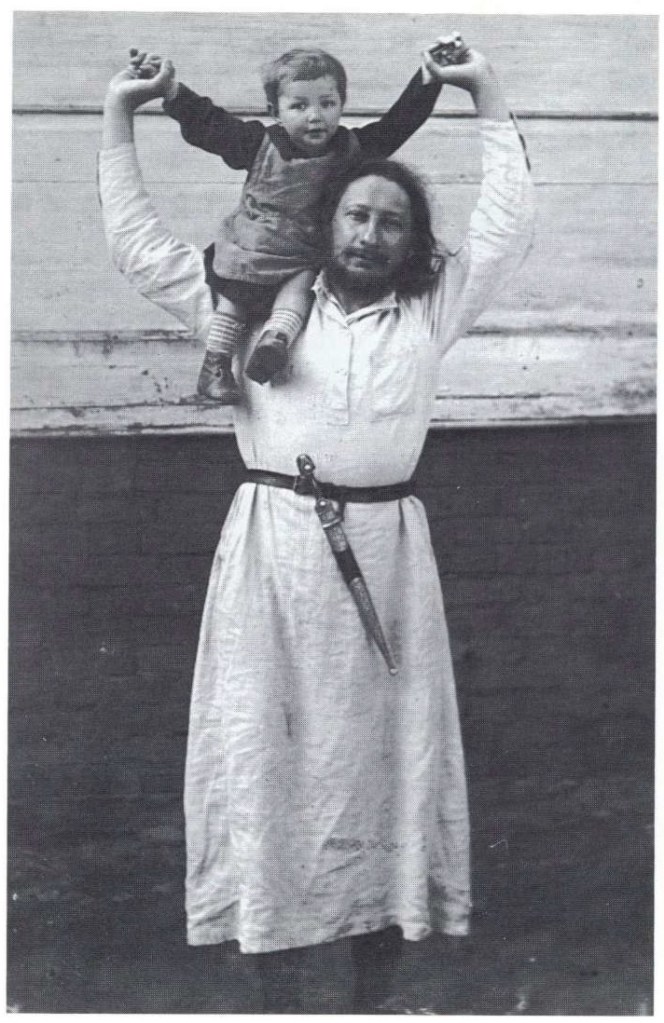
Pavel Alexandrovich Florensky is a towering figure of the 20th century. He is recognised among many significant thinkers of the world’s cultural and philosophical panorama of the previous century. In the face of cultural repression and religious persecution of the Soviet regime, he preferred martyrdom to exile and not to deny his faith.
The legacy of Florensky is incredibly multifaceted. His works span across the most varied fields of science and knowledge with clear competence. Florensky was the first scholar who attempted to combine Orthodox theology with modern logic. He argued that religious truth transcends known categories and Christianity tends to be antinomical. This article argues that a paradoxical notion would be more appropriate than antinomy in his thinking.
One of the aspects I personally found most fascinating about Florensky is his perception of reality. For him the phenomenon (natural or scientifical), although enlightening, always points decisively beyond itself, leading to something greater. However, such a revelation is achieved only through personal
love:
Inside me I was convinced, my heart was convinced, that the
Florenskij, P., 2009, Ai miei figli: Memorie di giorni passati, Arnoldi Mondadori, Milano. p.154
flowers, my flowers, the ones I loved, loved me in turn and
bloomed only for me and that my lack of attention to their beauty
would be an offence, an injury, indeed, to their affection for me.
Thus described, that loving relationship also opens up to an original approach to ecology, much in line with that of Laudato Si’ in which Nature ‘rather than a problem to be solved, […] is a joyful mystery to be contemplated with gladness and praise (§12)’. (Francis Pope 2015).
 Water & Wine
Leave a comment